
Certified AS/NZS 3760 compliance for Melbourne businesses — fast, thorough, fully documented. Call 1300 475 715 or Request a Free Quote.
What Is Electrical Test and Tag?
Electrical testing and tagging (commonly called test and tag) is the inspection, testing, and labelling of in-service electrical appliances to confirm they are safe for use in the workplace. Every tagged item receives a dated label showing the next inspection due date, giving your business a clear, auditable compliance record.
In Victoria, test and tag is governed by Australian Standard AS/NZS 3760:2010 (In-service safety inspection and testing of electrical equipment). For construction sites, AS/NZS 3012:2010 applies in conjunction. While Victoria does not have a single stand-alone law mandating test and tag, employers have a duty of care under the Occupational Health and Safety Act 2004 (Vic) and the OHS Regulations 2017 to ensure all electrical equipment is safe — and compliance with AS/NZS 3760 is the accepted standard for meeting that obligation.
Failure to comply can result in WorkSafe Victoria enforcement action, void insurance claims, and — most critically — preventable injury.
What Equipment Needs Testing and Tagging?
Under AS/NZS 3760, the following must be inspected and tested:
- Portable and hand-held appliances connected via flexible cord (power tools, drills, soldering irons, fans, heaters)
- Office equipment (computers, monitors, printers, phone chargers, desk lamps)
- Kitchen appliances brought into the workplace (microwaves, kettles, toasters, fridges)
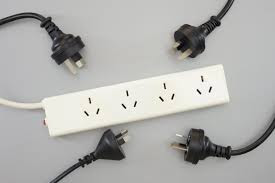
- Extension leads and power boards
- Residual Current Devices (RCDs / safety switches)
- Portable equipment moved during operation (floor polishers, vacuum cleaners, welding machines)
- Any equipment whose cord could be damaged during normal movement — overhead projectors, laptops, power boards
How Often Does Test and Tag Need to Be Done?
Testing frequency under AS/NZS 3760 depends on the environment and risk level:
| Environment | Equipment Type | Testing Interval |
| Construction & demolition sites | All portable equipment & RCDs | Every 3 months |
| Factories, workshops, manufacturing | Portable tools & equipment | Every 6 months |
| Hire equipment | All portable equipment | Before each hire or every 3 months |
| Hospitality, catering, cleaning | Portable equipment (hostile environments) | Every 6 months |
| Offices, retail, schools | Low-risk portable appliances | Every 5 years |
| All environments | RCDs (safety switches) | Every 12 months |
Not sure which interval applies to your workplace? Call our team on 1300 475 715 — we’ll assess your site and recommend the right schedule.
AFP’s Test and Tag Process — Step by Step
- Step 1: Visual Inspection
Every appliance is visually checked for physical damage — frayed cords, cracked casings, bent pins, damaged plugs, and signs of overheating or arcing.
- Step 2: Electrical Testing with Calibrated PAT Equipment
Each item is tested using industry-approved Portable Appliance Testing (PAT) equipment: earth continuity testing, insulation resistance testing, polarity checks, and RCD trip-time testing.
- Step 3: Pass / Fail Tagging
Items that pass receive a durable, date-stamped compliance tag. Failed items are clearly flagged and removed from service, with a written recommendation for repair or disposal.
- Step 4: Full Compliance Report & Asset Register
Every test produces a detailed written report listing all items tested, results, tag numbers, and next due dates — ready for WorkSafe audits and insurance requirements.
- Step 5: Retest Reminders
Australia Fire Protection tracks your compliance schedule and sends reminder notifications before your next test is due.
Test and Tag Pricing in Melbourne
Pricing depends on the number of items, site location, and testing environment. As a guide:
- Individual appliances: from $2.50–$5.00 per item (volume discounts apply)
- Site visits: minimum call-out fees apply; significantly reduced per-item cost for larger sites
- RCD testing: separate schedule, quoted per device
- Same-day service: available for urgent compliance requirements
Request a free, no-obligation quote — we’ll assess your site and provide a fixed price with no hidden fees.
Why Choose AFP for Electrical Testing & Tagging?
- Qualified, certified technicians — police-checked, fully insured, trained to current AS/NZS 3760:2010 standard
- Based in Thomastown — serving Melbourne CBD, North West and inner suburbs
- Comprehensive documentation — digital compliance report and asset register after every visit
- Bundled fire safety services — combine test & tag with extinguisher inspection, exit lighting testing, and fire alarm checks
- No lock-in contracts — one-off or recurring schedule, flexible around your business hours
Industries We Serve
- Construction & demolition — AS/NZS 3012 & 3760 compliance
- Manufacturing & warehousing
- Hospitality & commercial kitchens
- Retail & shopping centres
- Aged care & healthcare facilities
- Schools, universities & community centres
- Offices & corporate buildings
- Property management & strata
Related Services
Customers who book test and tag with AFP frequently combine it with:
- Fire Extinguisher Test & Tag Melbourne — annual compliance checks for all extinguisher types
- Exit & Emergency Lighting Testing Melbourne — AS/NZS 2293 compliant testing
- Thermal Imaging Assessment — detect hidden electrical faults behind walls and switchboards
- Fire Equipment Servicing — full AS 1851 scheduled maintenance
- Fire Alarm Systems Melbourne — installation, testing, and compliance
FAQ – Frequently Asked Questions
Is electrical test and tag a legal requirement in Victoria?
Victoria does not have a single law explicitly mandating test and tag. However, under the Occupational Health and Safety Act 2004 (Vic) and OHS Regulations 2017, employers must ensure all electrical equipment is safe. Compliance with AS/NZS 3760:2010 is the accepted method of meeting this duty of care. WorkSafe Victoria strongly recommends it as best practice for all Victorian workplaces.
How often does electrical equipment need to be tested and tagged?
Testing frequency depends on your workplace environment. Construction sites: every 3 months. Manufacturing and workshops: every 6 months. Low-risk offices: every 5 years. RCDs (safety switches): every 12 months. See the testing frequency table above for full details.
Which appliances need to be tested and tagged?
Any appliance that plugs into a 240V supply via a flexible cord: power tools, computers, heaters, fans, extension leads, power boards, and portable equipment moved during use. Fixed, hard-wired equipment is not within scope. RCDs are tested on a separate schedule.
Who can perform test and tag in Victoria?
Under AS/NZS 3760:2010, testing must be performed by a competent person who has completed an approved test and tag training course and is proficient with a PAT tester. A licensed electrician is not required for general appliance testing. AFP technicians are trained and qualified across all industry environments.
What happens if equipment fails a test?
Failed equipment is immediately removed from service and labelled with a FAILED — DO NOT USE tag. AFP provides a written report listing each failed item with the specific fault found and a recommendation for repair or disposal.
Can AFP provide compliance documentation for WorkSafe audits?
Yes. After every test and tag service, AFP issues a full compliance report and asset register listing every item tested, the test results, tag numbers, and next due dates — formatted for WorkSafe Victoria and insurance audit requirements.
Book Your Test & Tag Service
Ready to get compliant? AFP makes it easy.
📞 Call 1300 475 715. Serving Melbourne CBD, North West suburbs, and surrounds 🕐 Flexible scheduling — after hours available on request